Stakeholders
As a prevalent social media, Twitter definitely affects many people.
1) Direct Stakeholders
| Categories | Personal Users | Professional Users | Business Users |
|---|---|---|---|
| Definition | Personal users are defined as those who use Twitter for personal learning, reading news, and entertainment, and communication purposes. | Professional users are those who use Twitter to promote about their specific field of focus, including sharing about new topics and initiating conversations regarding it. | Business users are this who use Twitter with a business agenda. This means that the account is mainly for marketing reasons. |
| Examples | Users here include (but not limited to) college student who are trying to keep up with the latest news, parents who are trying to keep up to date with certain brands, high schoolers hoping to stay connected with the world around them and with their peers, and young professionals hoping to relax. | Users here include (but not limited to) researchers, phD students, scientists. | Users here include (but not limited to) influencers, celebrities, social media managers, new companies, and marketing managers. |
| Concerns and Benefits |
The primary concerns here include timeliness, communication, credibility, and privacy. |
The primary concerns here include methods of sharing information. This involves how timely information is shared, such as whether it’s convenient to spread certain updates; how credible the information shared is, such as whether a discussion involves reliable sources or valid facts. |
The primary concerns here include accessibility and presentability. This means that business users would want more people to be able to access and see what they have posted, so they may reach a greater audience. |
2) Non Target Stakeholders
| Categories | Viral Accounts | Spam Users |
|---|---|---|
| Who They Are | Viral accounts might not actually be human users. They are those who rely on bots/algorithms to spam. | Similar to viral accounts, they may also rely on bots and spam. |
| Examples/Personas | Examples here include viral merchants. | Examples here include spammers, especially those who hope to achieve hope. |
| Purposes | Their primary concerns include quantities and timeliness of posts. This means they are concerned about how fast certain tweets are delivered, how many people they have reached. Many people who choose to use bots might be hoping to sell certain products, make more money, and/or achieve fame of some sort. Some common ways they may do so is through randomizing a list of newly registered twitter users and following them, then spamming their feeds. | Their primary goals include making themselves more recognizable (at least in an online presence). Many people may do so by again targeting newly registered users, following them, or even mass sending DM’s to these newly registered users. |
Citation
Uddin, Muhammad & Imran, Muhammad & Sajjad, Hassan. (2014). Understanding Types of Users on Twitter.Time
1) Appropriation
a) Alt Text
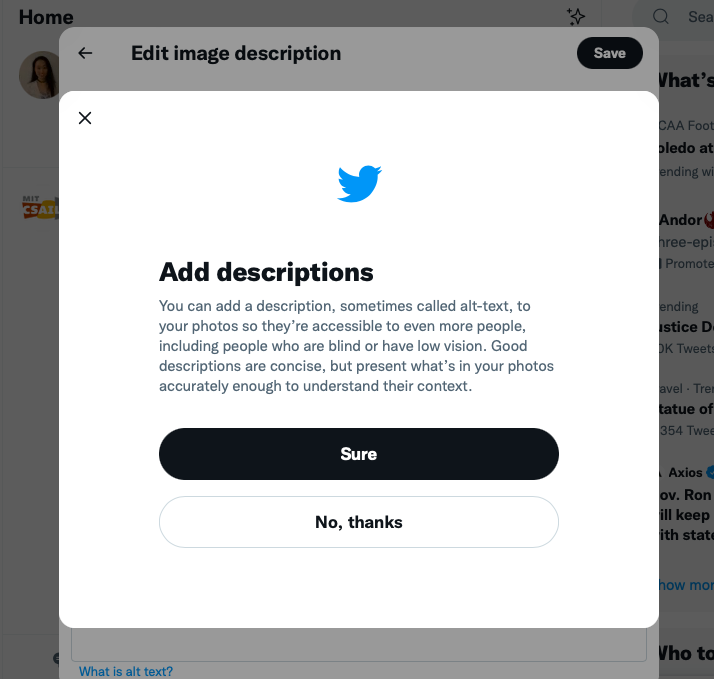
When posting on Twitter, there is an “alt text” field that you can fill in to describe image. This feature was originally intended to make Twitter more accessible, so people with vision deficiency can have a better picture of what’s going on. People have started to use it in very creative ways:
b) Camera
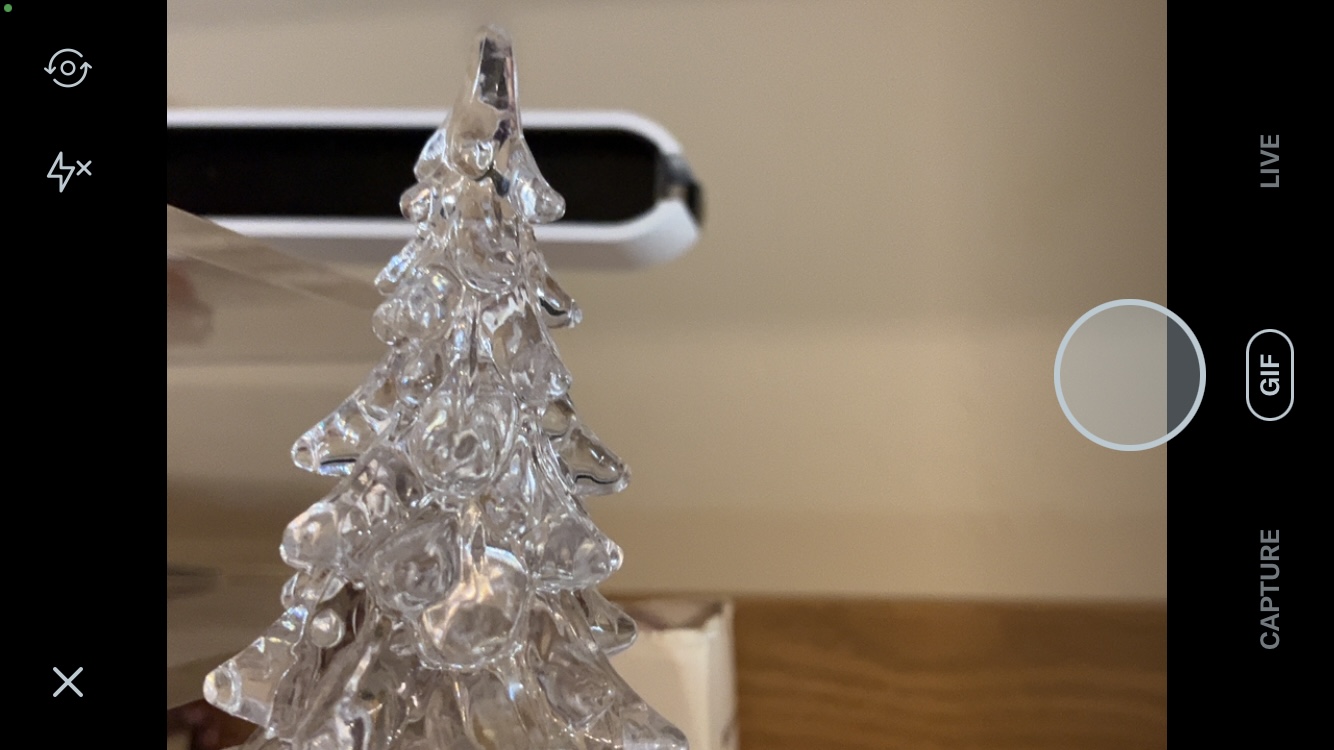
Twitter allows users to take a picture when posting. The camera function has evolved to include gif, where a static picture can be turned into a gif. Such a function allows easy creation for a gif, especially when the user needs to filter through a sea of gifs in Twitter’s database.
2) Long-Term Health and Well-Being
a) Effect on Eating Disorders
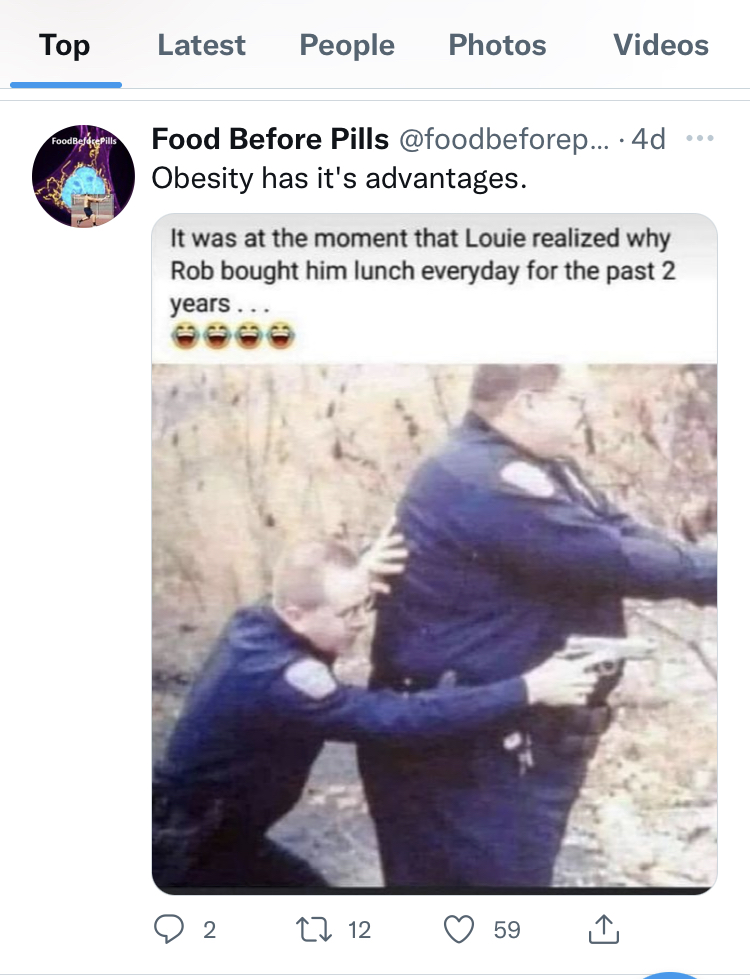
A common topic on Twitter is obesity. Unfortunately, this topic is loaded with emotions and derogatory humor. Jokes on this topic are retweeted pretty frequently; they often are inappropriate and offensive. The prevalence of such humor reported causes some adolescents who struggle with obesity to be offended. Specifically, daily immersion in such an environment may lead to a lack confidence, symptoms of depression, and unhealthy diet. People who struggle with obesity might start struggling with confidence issues, as they are being objectified. This could lead to depression, and could also cause people to take extreme measures (such as starving themselves, forced vomiting) to cut down weight. In more severe cases, this could lead to bulimia and hospitalization. Moreover, such online environment could alter people’s definition of “beauty” in a toxic manner, leading to a culture focused on “one-size-for-all”. This culture will eventually foster more eating disorders, as people alter their diets to fit the curated beauty standard.
b) Effect on Disease Outbreaks
Due to functions such as quick update and live services, Twitter serves as a powerful micro-blogging platform that can be used for crowdsourcing. Such a tool is very useful, because many real-time updates are available. Many of these updates contain information regarding geographic and demographics. We can use these information to track outbreaks. For example, Haiti’s 2010 cholera outbreak, Congo’s 2014 Ebola outbreak, and the current COVID-19 outbreak could all be tracked using information on Twitter. Currently, Twitter can be used for contact tracing, estimating disease activity (real time), computing areas that are at risk/most vulnerable. In the future, using such features, we could go above and beyond by expanding Twitter as a tool that helps prevent these outbreaks.
c) Effect on Anxiety
Because Twitter was created as platform for quick updates through short messages, it offers a place for instantaneous gratification. Features such as number of mentions, unread tweets, and push notifications all draws users to keep on coming back. In essence, it aggravates the sense of “FOMO” that many users are already experiencing. With the desire to know everything everywhere all the time, users are forcedly (though often times unaware) paying attention to all that’s happening. Such a mentality leads to an increase in anxiety among users, especially those who already struggle with anxiety. Because Twitter fosters such fear of missing out, it makes users trying to take in a multitude of information, thereby making their anxiety worse.
Citation
Turner, L. (2017, July 19). Is Twitter making you more anxious? The Atlantic. Retrieved September 15, 2022, from https://www.theatlantic.com/technology/archive/2017/07/how-twitter-fuels-anxiety/534021/
Yeung, A. W. K., Kletecka-Pulker, M., Eibensteiner, F., Plunger, P., Völkl-Kernstock, S., Willschke, H., & Atanasov, A. G. (1AD, January 1). Implications of twitter in health-related research: A landscape analysis of the scientific literature. Frontiers. Retrieved September 14, 2022, from https://www.frontiersin.org/articles/10.3389/fpubh.2021.654481/full
Pervasiveness
1) Accounting for Culture
a) As a Christian
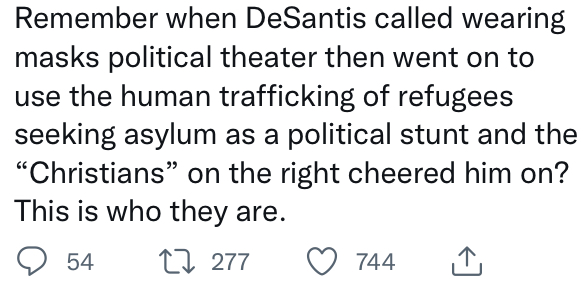
I grew up as a Protestant and went to a Catholic high school. An important part of high school was community service. Staffs from my high school used Twitter as a platform to share about their service highlight, which was them living out of their beliefs. Many of these services involve works with helping undocumented immigrants, sorting out donations, filling out food pantries, and even rallying for certain causes. These posts were pretty heart-warming to people who share the same religion/belief as we do, and it helped build an open online community that supports/inspires each member. However, with the on-going political tensions, some Twitter users start taking things out of context and escalating things to higher level. An example would be that many Christians serve in fields related to prenatal care, adoption services, and education, because they believe that life starts at conception. When their beliefs are made public, people on Twitter holding a different view start to generalize all Christians as “MAGA Christians”, spreading not only false ideology about the Christian beliefs, but also generalizing a diverse range of Christians into one narrow political identify. Issues such as gun control, foster care problems, and oppressing females are all rapidly fired under these posts regarding Christian working in prenatal care, adoption services, and education.
b) As a Third Culture Kid
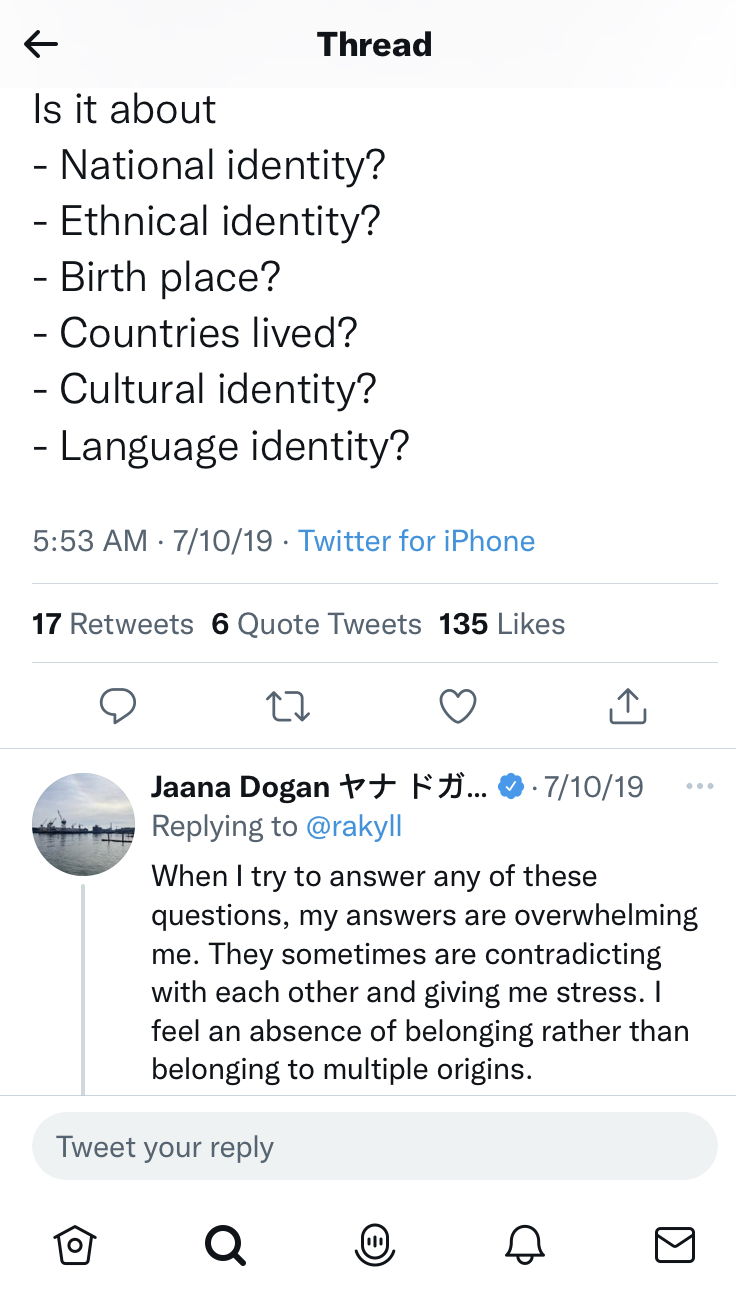
I also grew up as a third culture kid. This means I identify with multiple culture groups. Through Twitter, I get to exchange stories with other TCK’s. A simple search with #ThirdCultureKids allows me to share about my own story and connect with other TCKs. Thus, a benefit is that Twitter fosters an online community for the TCK’s. A potential drawback, however, is that many hashtags on Twitter tend to box people in through ethnicities and nationalities. When you associate with two cultural groups that hold differing viewpoints on a certain issue, things get interesting. For TCK’s, we are forced to take sides. It is even harder on Twitter for people with different backgrounds to come to a consensus that take in both sides’ perspectives.
2) Crossing National Boundaries
In the U.S., there are relatively less regulations on expression. Guaranteed by the First Amendment, people can express different views regarding politics, different genres of entertainment, and different jokes of all sorts. However, the same does not hold true in other countries. An example is South Korea, where there is more censorship compared to the U.S. The movie “Parasite” was even premiered there when it was such a big hit in the U.S.. When it comes to Twitter, it becomes a platform for people to share their opinions and updates here in the U.S.. In South Korea, however, Twitter becomes a platform that bypasses government censorship. People in South Korea are able to view videos on Twitter that are deemed “inappropriate”, “porn”, “violent” on other platforms. Thus, a challenge for Twitter to consider is which standard of “freedom of speech” should it abide. Should it abide the U.S. standards since it was created with “freedom of expression” in mind, or should it abide to Korean standards since it is expanding overseas? The answer itself may continue many nuance and is more complicated than just choosing a side.
Values
1) Desired Values
a) Privacy
With the multitude of public accounts, hashtags to find topics, retweet functions, etc, it becomes very easy to look for information online. This posts the question of security: how do we protect the privacy of those who are online and offline? For online users (people who use Twitter), there should ideally be measures to make sure that users are coming from a verified account; tweets and contents are not shared to places such as the dark web; and users’ personal information are not disclosed without their consent. For offline users (people who don’t use Twitter), this means if their name/stories appear in an article/thread, online users should not be able to track them down without their consent. That is, if someone featured in a tweet chooses to stay anonymous, other users should not be able to figure out that person’s identity. This is especially important, because when users are not online, they are not directly aware of the online tensions and thus more vulnerable to cyberbully turning physical.
b) Transparency
Another value here is transparency. Multiple social media platforms, including Twitter, generates curated content for each user based on posts he/her read, tweets he/she retweeted, and tweets he/she liked. While the algorithm for generating feed does not have to be made clear to public, it would be nice to have some sort of user input. Currently, Twitter makes it easy to create an “echo chamber”. That is, Twitter keeps on sending users views they would agree on and content they would support. The effect of this is two-folded. On one hand, it entertains the user; on the other hand, it does not allow users to hear a different perspective. Ideally, it would be great if Twitter could incorporate some sort of participatory design, such that users can tell Twitter what they want to hear and Twitter’s algorithm can take it into account.
c) Balance
With the short texts and fast information updates on Twitter, it is easy to get instant gratification. This makes Twitter addicting, and even leads to an increase in anxiety. Ideally, it would be nice it Twitter can have a screen time limit, so users are able to track the time they’ve spent on Twitter and take measures to set a limit. This means that Twitter could support better balance between social media time and other things that users might want to do in their day-to-day lives.
2) User Experience of Values
1) Accessibility
Something I care about is accessibility in interface design. This falls inline with inclusivity. I think Twitter’s “alt text” feature really helps with accessibility. However, with the re-appropriation(i.e. people using it for jokes and typing in all caps), it makes “alt text” less powerful. Ironically, misusing “alt text” makes accessing visual media even more difficult for people who are visually-impaired. It would be great if, instead of asking user to type in their own “alt text”, there could be pre-defined “alt text” choices. This way, the user can simply select an “alt text” before they post.
2) Consistency
I particularly like things to be organized and consistent. On Facebook, I like it when things are in chronological order, because it so much easier to find information this way. On Twitter, however, I’m unable to do so. Every time I scroll, there seems to be new content that don’t follow chronological order. Because of this, I started to use Twitter less. What I do like about Twitter is its transparent setting, where the app makes it very easy to edit interests and topics.